-
10, Filton Road, Bristol, BS7 0PA

Your Cart (£0.00)
Underarm waxing side effects: your full guide
Underarm waxing side effects: your full guide
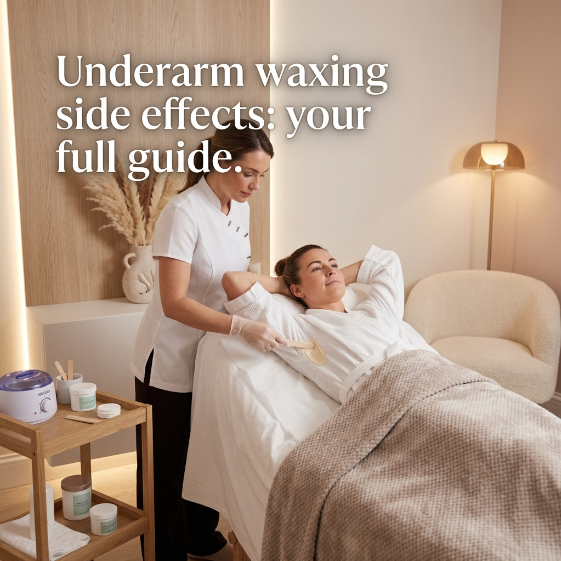
Smooth, hair-free underarms for weeks at a time — it’s no wonder waxing is one of the most requested services at UK spas. But if you’ve ever noticed redness, bumps, or unexpected skin changes after your appointment, you’ve probably found yourself wondering whether it’s normal.
Understanding underarm waxing side effects before (or after) your first session means you’re never left guessing. The underarm area is one of the most delicate zones on the body, and even a perfectly performed wax can cause temporary reactions that catch clients off guard.
In this guide, the Glowroom team covers everything you need to know: why your underarm skin responds the way it does, what reactions are entirely expected, what to watch out for, and how to keep your skin calm, smooth, and healthy between appointments.
Whether you’re brand new to waxing or simply want better aftercare advice, you’ll find clear, practical answers here.
Why underarm skin needs extra care after waxing
The underarm area isn’t like the skin on your legs or arms. It’s naturally thinner, more sensitive, and regularly exposed to friction, sweat, and the active ingredients in deodorant — all of which mean it can respond more dramatically to hair removal than other parts of the body.
Here’s what makes the underarms particularly reactive after a wax:
- Delicate, thin skin — The underarm skin has fewer layers of protection than areas like the thighs or calves, making it quicker to redden and slower to settle.
- Constant movement and friction — Every time you move your arms, clothing and skin rub against the freshly treated area, which can prolong irritation.
- Warmth and moisture — The underarm environment is naturally warm and prone to perspiration, which means open follicles post-wax are more exposed to bacterial activity.
- Deodorant and antiperspirant use — Many people instinctively reach for their deodorant straight after waxing, not realising the alcohol, fragrances, and aluminium compounds in these products can severely irritate freshly treated skin.
- Hair texture — Underarm hair tends to be coarser and grows in multiple directions, which can make clean removal trickier and increase the likelihood of follicular reactions.
Knowing this helps set realistic expectations and makes good aftercare far easier to follow.
Common underarm waxing side effects — what’s completely normal
Some skin reaction after waxing is entirely expected. The process removes hair from the root, which is a physical event the skin has to respond to. The key is recognising which reactions are routine and which might need attention.
According to the NHS, keeping freshly treated skin clean, cool, and free from harsh products in the hours following hair removal is the most effective way to minimise the risk of irritation or infection — a simple principle that makes a genuine difference.
Here are the most common reactions you might notice after your wax:
- Redness — The most frequent response. The skin often appears pink or lightly flushed immediately after treatment and usually settles within a few hours.
- Mild swelling — Slight puffiness around the follicles is normal and typically resolves within 24 hours.
- Small raised bumps — Often misidentified as spots or a rash, these are usually just follicular responses and disappear on their own within a day or two.
- Tenderness or sensitivity — Freshly waxed skin may feel tender when touched or when clothing brushes against it, particularly in the first 12 hours.
- Mild itching — As the skin heals and hair begins to regrow, some itching is very common. Resist the urge to scratch, as doing so can worsen inflammation and increase the risk of scarring.
If these reactions clear up within 24 to 48 hours, there’s nothing to worry about. Persistent reactions beyond 72 hours, however, are worth reviewing — either through your aftercare routine or with your therapist.
Why do bumps appear after waxing underarms?
This is one of the most common questions the Glowroom team is asked, and it’s easy to understand why. You leave your appointment with perfectly smooth skin, only to notice small bumps emerging the following day. The good news is that this is rarely a sign that anything has gone wrong.
Here are the main reasons bumps develop after waxing underarms:
- Follicular inflammation — When hair is pulled from the root, each follicle experiences a small amount of trauma. The resulting inflammation creates a raised bump at the surface, which is simply your skin’s natural healing response.
- Ingrown hairs — As hair regrows, it sometimes curls back beneath the skin rather than breaking through correctly. Coarse underarm hair and friction from clothing make the underarm area particularly susceptible to this.
- Clogged follicles — Sweat, deodorant residue, and skin cells can block open follicles after waxing, causing congestion that resembles small whiteheads or pimples.
- Heat and sweat — If you exercise or sweat heavily too soon after waxing, warmth and bacteria enter freshly opened follicles and create the conditions for bumps to form.
Practical steps to prevent and manage bumps:
- Wear loose, breathable cotton clothing for at least 24 hours after your appointment
- Avoid exercise, saunas, or anything that causes sweating for a full day post-wax
- Apply a soothing, fragrance-free gel or pure aloe vera to calm the follicles
- Begin gentle exfoliation 48 to 72 hours after waxing to keep follicles clear and help hair emerge correctly
- Avoid tight or synthetic fabrics directly against the treated area
If bumps persist beyond a week, appear to be filling with fluid, or feel genuinely painful, it’s sensible to consult a healthcare professional.
Does waxing cause dark underarms? Understanding pigmentation
Dark underarms are a very real concern for many clients, and it’s a topic worth addressing honestly. Waxing, when performed correctly by a trained therapist, does not directly cause permanent darkening. However, certain reactions — particularly when skin trauma is repeated or aftercare is poor — can trigger a process called post-inflammatory hyperpigmentation (PIH).
PIH occurs when the skin produces excess melanin in response to inflammation. In the underarm area, this results in patches that appear darker than the surrounding skin, which can be distressing and slow to fade.
Factors that can contribute to dark underarms:
- Repeated irritation caused by incorrect waxing temperature or technique
- Harsh deodorants or antiperspirants applied directly after waxing
- Friction from tight clothing during the skin’s healing window
- Picking at bumps, ingrown hairs, or post-wax blemishes
- Inconsistent or inadequate aftercare between appointments
The British Skin Foundation highlights that post-inflammatory hyperpigmentation is more pronounced in those with medium to deep skin tones, and that preventing the initial inflammation is significantly more effective than attempting to treat darkening after it has developed.
Ways to reduce the risk of dark underarms after waxing:
- Switch to a gentle, alcohol-free deodorant in the 48 hours following your appointment
- Incorporate brightening actives such as vitamin C or niacinamide into your skincare routine to gradually even skin tone
- Avoid direct sun exposure on the underarm area immediately after waxing
- Always book with a spa whose therapists are trained in skin-safe waxing techniques
At Glowroom, our team performs underarm waxing using professional-grade products and precise application methods that are designed to protect the skin and reduce the risk of pigmentation and long-term discolouration.
How to soothe and care for your underarms after waxing
The 24 to 48 hours following your appointment represent the most important window for your skin’s recovery. Thoughtful aftercare during this period dramatically reduces your risk of bumps, darkening, rashes, and prolonged irritation.
Do this after your underarm wax:
- Apply a cool, damp compress immediately after your appointment if the area feels hot or swollen
- Use a fragrance-free, gentle moisturiser or aloe vera gel to hydrate and soothe the skin
- Wear loose, natural-fibre clothing — cotton is ideal — for at least 24 hours after waxing
- Pat the underarm area dry after washing rather than rubbing it with a towel
- Begin light exfoliation 48 to 72 hours post-wax to prevent ingrown hairs and keep follicles clear
Avoid these in the 24 hours after waxing:
- Perfumed deodorants, sprays, or antiperspirants
- Hot baths, swimming pools, or steam rooms
- Tight clothing or synthetic fabrics that trap heat
- Exercise or activities that cause significant sweating
- Touching, scratching, or picking at the treated area
Following this routine consistently between appointments will keep your underarm skin healthy, reduce the likelihood of recurrent side effects, and help you get the most from every wax session.
Frequently asked questions about underarm waxing side effects
Q: How long do side effects from underarm waxing typically last?
Most common reactions — including redness, mild swelling, and small bumps — settle within 24 to 48 hours. If you’re still experiencing noticeable irritation beyond 72 hours, it’s worth reviewing your aftercare or discussing the issue with your therapist at your next visit.
Q: Is it normal for underarms to feel itchy after waxing?
Yes, mild itching is very common as the skin heals and hair begins to grow back. Applying a soothing, fragrance-free gel can relieve the sensation. Try not to scratch, as this can worsen inflammation and potentially introduce bacteria to open follicles.
Q: Can underarm waxing permanently damage the skin?
When performed correctly by a trained professional, waxing does not cause permanent skin damage. Lasting issues such as scarring or persistent pigmentation are most commonly linked to improper technique, wax that is too hot, or inadequate aftercare rather than the treatment itself.
Q: How do I prevent ingrown hairs after waxing my underarms?
Regular, gentle exfoliation is the most effective preventative measure. Begin exfoliating 48 to 72 hours after your appointment and continue every two to three days. This helps hair break through the skin surface cleanly and significantly reduces the chance of ingrown hairs developing.
Q: Is underarm waxing suitable for sensitive skin?
Yes, but it’s essential to let your therapist know before your appointment so they can adapt their approach. A skilled professional will select appropriate wax formulations, apply at a safe temperature, and take extra care to minimise trauma to sensitive skin. At Glowroom, we tailor every waxing treatment to your individual skin type and concerns.
Conclusion
Knowing your skin is one of the best investments you can make in your beauty routine. The underarm waxing side effects covered in this guide — from temporary redness and bumps to questions about pigmentation and ingrown hairs — are almost all manageable with the right professional technique and consistent aftercare. Understanding what’s normal allows you to feel confident before, during, and after every appointment.
Ready to experience professional underarm waxing in a luxurious, expert environment? Book your appointment at Glowroom today and let our skilled therapists take care of the rest → https://glowroom.uk/schedule-appointment/
