-
10, Filton Road, Bristol, BS7 0PA
Your Cart (£0.00)
Long Hair, Less Weight: The Layers Guide
Long Hair, Less Weight: The Layers Guide
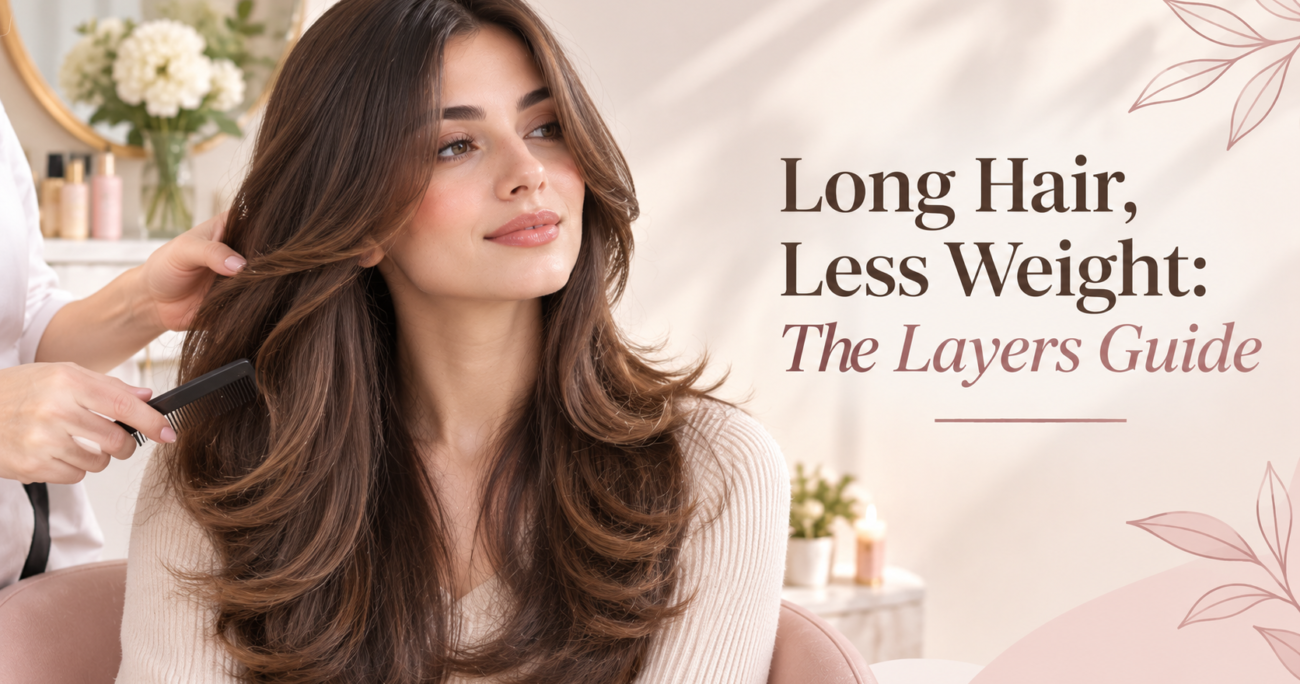
There is a particular kind of hair frustration that only people with long hair know. You like the length. You have worked hard to grow it. But somewhere along the way it started to feel heavy, flat and slightly shapeless, hanging straight down with no movement and very little life. Cutting it short is not the answer, because length is exactly what you want to keep.
That is where long layers come in. At Glow Room in Bristol, a long layered haircut is built around one idea: remove weight from the inside, keep the length on the outside. Done properly, it gives long hair bounce, shape and an easier daily routine without sacrificing the length you love.
What Long Layers Actually Do
A long layered cut works by creating soft, strategic tiers through the interior of your hair while the perimeter stays dense. Because the shorter pieces sit inside the longer ones, they take pressure off the roots and let the hair lift and swing rather than drop straight down. The shape reads as fuller at the top and fluid at the ends, which is why so many people describe the result as hair that finally looks “alive” again.
It is also a very different thing from a blunt, one-length cut. A blunt cut can look sharp and polished, but it asks hair to do all the work on its own. Layers share the work around, which is especially useful for thick or heavy hair that tends to collapse under its own weight.
Benefits of a Haircut With Long Layers
- Instant structural volume — long layers lift your strands from the root, so your length stops pulling your style flat.
- Seamless blend and fluidity — the layers are blended so they melt together, without blocky lines or harsh shelves.
- Customised face framing — face-framing pieces can be tailored to soften the jawline and draw attention to your eyes.
- Lighter, more manageable hair — particularly helpful for thick hair, as removing interior weight helps your style hold its bounce through the day.
Who Is This Haircut For?
- Anyone with heavy, dense hair who wants bulk taken out so styling feels manageable.
- Clients with wavy or curly hair who would like layers shaped to define their natural texture.
- People with fine, flat hair who want the appearance of more movement without losing length.
- Anyone looking for a Bristol salon that understands modern, blended texturising rather than a quick trim.
The Long Layers Process: How It Works
01. Purifying Salon Wash
Your appointment begins with a refreshing shampoo wash using lightweight, professional formulas. This cleanses away styling build-up and gives your stylist balanced hair tension, which matters a great deal for an accurate cut.
02. Precision Tiered Cutting
Next, your stylist sections your hair and works with expert wet-cutting lines. Sections are pulled at calculated angles to create soft interior tiers through the back, while the perimeter stays dense. These are then connected seamlessly to the longer layers at the front so your face is framed beautifully.
03. Signature Bouncy Blowout
Finally, we finish with a professional blowout using large round brushes. This brings out the movement, body and swing of your fresh layers, and you leave seeing the shape at its best.
Duration and Pricing
- Long Layers and Luxury Blowout Finish: £40
- Duration: approximately 45 to 60 minutes
- Includes: face-shape mapping, a premium shampoo cleanse, an advanced blended layered cut, and a high-volume professional blowout
Long Layers on Different Hair Types
One cut does not behave the same way on every head of hair, which is why the consultation matters as much as the cutting itself.
Thick hair. This is where long layers earn their reputation. Removing interior weight lets thick hair move and dry faster, and many people find it far easier to style once the bulk has been reduced. The key is taking weight out evenly so the ends do not look thin or stringy.
Fine hair. Fine hair needs a lighter touch. The aim is to create shape and lift at the crown without over-thinning the ends, so the layers are placed carefully and kept longer than you might expect.
Wavy and curly hair. Layers can help curls and waves sit in a more defined, balanced shape, rather than stacking into a triangle. Cutting is planned around your natural pattern so the layers support the texture instead of fighting it.
Straight hair. On straight hair, layers add movement and the sweeping, fluid swing that blunt lengths can lack, especially once blow-dried with a round brush.
Choosing Your Layer Length and Face Framing
The shortest layer is usually the one people worry about, so it is worth talking through before any cutting begins. Face-framing pieces that start around the cheekbone tend to add softness and lift, while pieces that begin nearer the jaw can feel more subtle and easier to grow out. Your stylist will map this to your face shape and your hair’s natural fall, so the result suits you rather than copying a photograph exactly. Bringing reference pictures is a genuinely good idea, because it gives everyone the same starting point.
How to Prepare for Your Appointment
You do not need to do anything dramatic. Arriving with your hair in its natural state helps, as heavily styled or freshly straightened hair can hide your true texture. Mention how you usually style your hair, how much time you want to spend on it each morning, and whether you want to keep every last centimetre of length. Those details shape the cut far more than any technique name does.
Styling Your Layers at Home
One of the best things about long layers is how forgiving they are day to day. A rough blow-dry, lifting at the roots with your fingers, is often enough to show the shape. For a more polished finish, a large round brush will recreate the bouncy salon blowout. A light volumising spray at the roots and a cool shot of air at the end of drying can help the lift last longer. If your hair is wavy, scrunching with a little product while it is damp usually keeps the layers looking defined.
Keeping the Shape Fresh
Layers grow out gently, but they still benefit from a refresh every so often to keep ends healthy and the shape intact. A regular trim helps prevent the lower layers from becoming straggly. If your hair is prone to dryness, a nourishing mask on the lengths can keep the ends looking smooth and give the layers a cleaner finish. Many people also pair layering with a smoothing treatment when frizz is part of the problem, which is where something like a keratin treatment can complement the cut.
Long Layers vs Other Layered Cuts
Long layers sit at the gentler end of the layering spectrum. A butterfly cut has more dramatic contrast between shorter crown pieces and longer lengths, creating a stronger, more voluminous shape. A shag is more textured and deliberately undone. Long layers, by comparison, are about softness and weight removal: the look is natural, fluid and easy to live with. If you want maximum drama, you may prefer one of the bolder styles; if you want your hair to simply look and feel better, long layers are a very good place to start.
Common Layering Mistakes, and How We Avoid Them
Layers have a reputation for going wrong, and it is usually for the same few reasons. Understanding them helps you ask better questions at your consultation.
Layers that are too short. The most common regret is a shortest layer that sits higher than expected, leaving the hair looking choppy once it dries. We discuss exactly where the first layer will land before any cutting starts, and we would always rather begin a little longer than too short.
A harsh “shelf” between layers. When tiers are cut without being blended, you can see a visible step where one layer ends and the next begins. A properly blended cut connects every section, so the transition looks smooth and the hair falls naturally.
Thin, wispy ends. Removing too much weight from the ends can make long hair look sparse at the bottom. The aim of long layers is to keep a dense perimeter, so the ends still look healthy and full.
A cut that ignores your routine. A layered style that needs thirty minutes of styling every morning is no use if you have five. Telling your stylist honestly how much time you will spend on your hair means the shape can be planned around real life.
Why the Consultation Matters So Much
With a cut like this, much of the quality is decided before the scissors come out. Your stylist looks at your hair density, how it falls naturally, where it tends to part, and how it behaves once dry. Face-shape mapping is part of the service for exactly this reason: the same layering technique can sit very differently on different faces. If you have ever had a layered cut that looked wonderful on a photograph but not on you, a thorough consultation is usually the missing piece.
Making the Most of Your Appointment
A few small habits will help you leave happier. Bring one or two reference photos, but be open to adjusting them, since hair type and density change how a style turns out. Say clearly what you do not want as well as what you do. If you are growing your hair, mention it, because layers can be planned to keep the length you are working towards. And ask your stylist to show you how to recreate the finish at home, so the blowout you receive does not feel like a one-off.
A Cut for Every Season
Long layers are easy to wear throughout the year. In cooler months they sit comfortably under scarves and hats without flattening completely, and the movement helps hair look lively rather than heavy against winter clothing. In warmer weather, taking weight out can make long hair feel lighter and less stifling. It is one of the few cuts that earns its place in every season, which is part of why it has stayed popular for so long.
Frequently Asked Questions
Will I lose a lot of length? No. Long layers are designed to keep your overall length. The work happens inside the hair, removing weight and adding movement.
Are long layers suitable for thick hair? Yes, and thick hair is one of the main reasons people book this cut. Weight can be taken out so the hair feels lighter and is easier to style.
Can long layers work on fine hair? They can, with a careful approach. Layers are kept subtle so the hair gains movement without looking thin at the ends.
Does a blowout come with the cut? Yes. The service includes a high-volume professional blowout finish.
How do I choose between layers and another style? Talk it through at your consultation. Your stylist can advise based on your hair type, your lifestyle and how much styling you want to do.
Related Treatments
- Butterfly Haircut — a bolder, more voluminous layered option
- The Layered Shag — a textured, lived-in take on layers
- Women’s haircuts in Bristol — explore the wider haircut menu
- Keratin Treatment — smoothing care to pair with your new cut
- Glow Room treatment packages — combine your haircut with other treatments
Book Your Long Layers Haircut Today
Ready to keep your length and lose the weight? Book your Long Layers haircut at Glow Room via glowroom.uk, or call our team on +44 7597 732017 with any questions before you book.
