-
10, Filton Road, Bristol, BS7 0PA
Your Cart (£0.00)
Breakout-Prone Skin: What a Facial Does
Breakout-Prone Skin: What a Facial Does
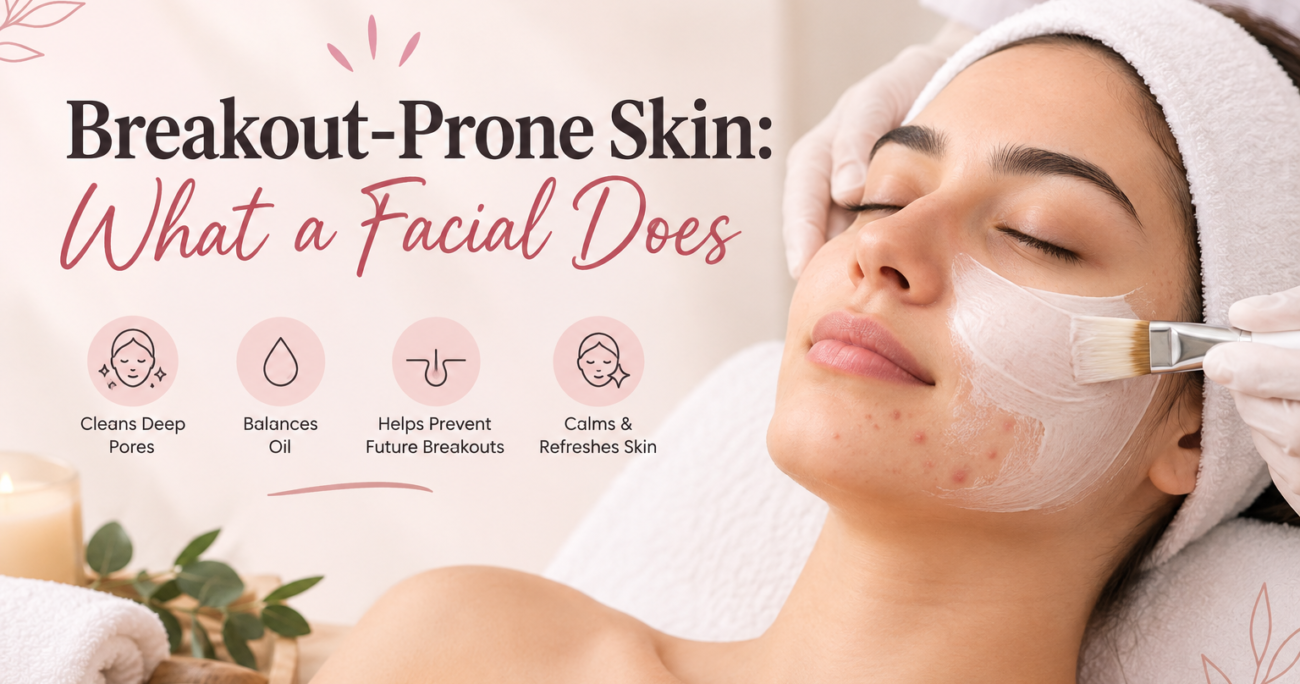
If your skin breaks out regularly, you have probably tried most of what the high street offers: cleansers that squeak, spot treatments that dry everything out, and masks that promise a lot. Sometimes they help for a few days. Often they do not, because acne-prone skin is rarely about one single problem. It tends to involve excess oil, clogged pores, surface build-up and skin that has been stressed by too many harsh products.
A professional acne facial approaches the problem differently. Instead of attacking the skin, it works to cleanse, purify and rebalance it. At Glow Room in Bristol, our Acne Facial is designed for skin that is prone to breakouts, blemishes, blackheads and congestion, using a structured, step-by-step treatment tailored to your skin on the day.
Why Acne-Prone Skin Needs a Different Kind of Facial
A standard relaxing facial is lovely, but it is not built around congestion. Acne-prone skin needs more targeted care: thorough but gentle cleansing, careful attention to blocked pores, and products chosen to help control oil without stripping the skin. Over-cleansing and over-scrubbing are common mistakes, and they can leave skin irritated and shiny at the same time. A professional treatment aims to find the balance, which is something that is difficult to judge alone in the bathroom mirror.
Benefits of an Acne Facial
- Deep skin cleansing — helps remove dirt, oil and impurities from clogged pores.
- Fewer breakouts over time — aims to help control acne-causing bacteria on the skin.
- Oil balance — works to regulate excess sebum for a clearer-looking complexion.
- Improved skin texture — helps smooth rough, uneven skin.
As with any skincare treatment, results vary from person to person, and a single facial is not a cure for acne. Think of it as a professional reset that supports a good home routine.
Who Is This Treatment For?
- Anyone who struggles with acne, breakouts or blemishes.
- People with oily or combination skin.
- Anyone with clogged pores or blackheads that keep returning.
- Clients who feel their skin has become confusing or reactive and want a professional assessment.
How the Acne Facial Works
01. Skin Analysis
We start with a detailed consultation to understand your skin type, your acne concerns and how sensitive your skin is. This shapes everything that follows, so it is worth being open about what you use at home and what has or has not worked.
02. Purifying Deep Cleanse
A gentle yet effective cleanse removes surface impurities, excess oil and any makeup residue, preparing the skin for deeper work.
03. Steam and Extraction
Steam is applied to soften and open the pores, followed by careful extraction to remove blackheads and blocked pores safely. Extractions are done with care and are never rushed; if an area is too inflamed or sensitive, it is left alone.
04. Anti-Acne Mask and Oil-Control Serum
The treatment finishes with an anti-acne mask and an oil-control serum, designed to calm the skin and help keep oil in check after the cleansing and extraction stages.
Duration and Pricing
- Acne Facial: £25 per session
- Duration: approximately 45 to 60 minutes
- Includes: skin analysis, purifying deep cleanse, steam and extraction, anti-acne mask and oil-control serum
What Is the Difference Between Acne, Congestion and Blackheads?
These terms often get mixed up, and the distinction helps explain why a professional assessment is useful. Congestion usually means pores that are partly blocked with oil and dead skin, giving a rough, bumpy feel without obvious inflamed spots. Blackheads are blocked pores that have darkened at the surface. Breakouts, by contrast, tend to be inflamed and tender. Each needs slightly different handling, which is why your therapist looks closely at your skin during the analysis before choosing how firmly or gently to work.
What to Expect During Extractions
Extractions are the part people worry about most, so it is worth being clear. The steam softens the skin first, which makes the process easier and more comfortable. You may feel mild pressure, and some areas can feel slightly sensitive, but it should not be painful. If you want to pause, tell your therapist. Afterwards, skin can look a little pink for a short time, which usually settles quickly. We do not extract inflamed or sore spots, because that can make irritation worse and increase the chance of marks.
How to Prepare for Your Appointment
- Come with a clean face if you can, or let us know what you are wearing.
- Pause strong exfoliating acids or retinol-type products for a few days beforehand, unless your therapist has advised otherwise.
- Do not pick or squeeze spots before you come in, as it can leave the skin more inflamed.
- Tell us about any skincare products you use and any medication you take for your skin.
Aftercare: Protecting Your Results
What you do afterwards matters nearly as much as the treatment itself. For the first day, keep your routine simple: gentle cleanser, light moisturiser and sun protection. Avoid touching your face, wearing heavy makeup or using harsh exfoliants straight away. Skip strenuous exercise and saunas for the rest of the day, as heat and sweat can irritate freshly treated skin. Drinking enough water and changing pillowcases regularly are small habits that help over the longer term.
Building a Simple Home Routine
Acne-prone skin usually does best with consistency rather than complexity. A gentle morning cleanse, a lightweight moisturiser and daily sun protection cover the basics. In the evening, cleanse thoroughly, especially if you have worn makeup or sunscreen. More products are not better: layering too many actives at once is a common cause of irritation. If you want to add an exfoliating or targeted product, introduce one at a time so you can see how your skin responds.
How Often Should You Book?
Many people find that booking an acne facial roughly every four weeks fits with the skin’s natural renewal cycle, but the right schedule depends on how your skin behaves. Your therapist can advise after seeing your skin in person. Between appointments, a consistent home routine will do most of the work.
When to See Your GP or a Dermatologist
A facial can support the appearance of your skin, but it is not medical treatment. If your acne is severe, painful, scarring, or sudden in onset, or if it is affecting your confidence or wellbeing, it is sensible to speak to your GP or a dermatologist. A facial can work alongside medical advice, and your therapist will always tell you honestly if they think something is outside what a salon treatment can help with.
Common Skincare Myths About Breakouts
A lot of conflicting advice circulates about acne-prone skin, and some of it quietly makes things worse. Here are a few myths we hear regularly.
“Oily skin does not need moisturiser.” Skipping moisture can leave skin dehydrated, which may encourage it to produce even more oil. A light, non-greasy moisturiser is usually a better choice than none at all.
“Scrubbing harder gets skin cleaner.” Aggressive scrubbing can damage the skin barrier and leave the face red, tight and more reactive. Gentle, consistent cleansing is generally kinder and more effective.
“Sun exposure dries spots out.” Sun can make marks left by breakouts darker and more noticeable, and some acne products make skin more sensitive to sunlight. Daily sun protection is an important part of the routine.
“Only teenagers get acne.” Breakouts can appear or continue well into adulthood. If your skin is acting up in your twenties, thirties or beyond, you are far from alone.
“Squeezing spots speeds up healing.” Picking can push bacteria deeper, prolong healing and increase the chance of marks or scarring. If a spot needs attention, professional extraction on suitable areas is a safer route than doing it yourself.
What Your Skin May Be Telling You
Where and how your skin breaks out can offer useful clues, although it is never a substitute for a proper assessment. Congestion across the forehead and nose often relates to oil and clogged pores. Breakouts around the jaw and chin are sometimes linked to hormonal changes, stress or sleep. Tightness alongside spots can point to a skin barrier that has been over-treated. During your skin analysis, your therapist will look at the whole picture, including your routine, your lifestyle and what you have already tried, rather than only the spots you can see.
Lifestyle Habits That Support Clearer-Looking Skin
No facial can do everything on its own, and small daily habits make a real difference. Washing your face after sweating, rather than letting sweat and product sit on the skin, helps keep pores clearer. Cleaning your phone screen and changing your pillowcase regularly reduces the amount of bacteria and oil that touches your face. Removing makeup before bed, even when you are tired, is one of the simplest and most effective habits. Eating a balanced diet, drinking water and managing stress will not guarantee clear skin, but they can help your skin look and feel its best.
How an Acne Facial Fits With Your Other Treatments
Once your skin feels calmer and more balanced, there are other treatments that can complement it. A brightening facial can help with a dull, uneven tone left behind by breakouts, and a skin-refreshing facial offers a gentler option for tired-looking skin. If breakouts affect your back as well as your face, mention it when you book so we can talk through suitable options. Planning treatments in sequence, rather than all at once, usually gives skin the best chance to settle between appointments.
Why Choose Glow Room for Breakout-Prone Skin
Skin that breaks out is often skin that has been let down by quick fixes, so we try to do the opposite. Every treatment begins with a proper skin analysis rather than a fixed routine. Extractions are careful and unhurried. Products are chosen to calm and balance rather than strip. And you will always get an honest answer if we think your skin needs a different kind of support. We are based at 10 Filton Road in Horfield, Bristol, in a calm, clean and welcoming space where you can relax while we look after your skin.
Frequently Asked Questions
Will I break out after the facial? Some people notice a little temporary purging or sensitivity as congestion comes to the surface, but this varies. Tell your therapist if you are worried.
Is the treatment suitable for sensitive skin? The approach is adjusted to your skin on the day. Let us know about sensitivity during the analysis so we can choose gentler steps where needed.
Can I wear makeup afterwards? It is better to leave your skin bare for a few hours if you can, so it can settle.
Is one session enough? A single facial can leave skin feeling clearer and calmer, but acne-prone skin generally benefits from regular care and a steady home routine.
How is this different from a deep cleansing facial? A deep cleansing facial focuses broadly on removing build-up. The acne facial adds an anti-acne mask and oil-control serum and is designed around breakout-prone skin.
Related Treatments
- Acne Facial in Bristol — our overview of the treatment
- Deep cleansing facial — a broader pore-clearing option
- How often to get a deep cleansing facial — plan your schedule
- Brightening Facial — for tone and radiance once skin is calmer
- Glow Room treatment packages — build a regular skincare plan
Book Your Acne Facial Today
Ready to give breakout-prone skin the professional care it needs? Book your Acne Facial at Glow Room via glowroom.uk, or call our team on +44 7597 732017 with any questions before you book.
