-
10, Filton Road, Bristol, BS7 0PA
Your Cart (£0.00)
Butterfly Haircut Bristol | Glow Room Hair Salon
Butterfly Haircut Bristol | Glow Room Hair Salon
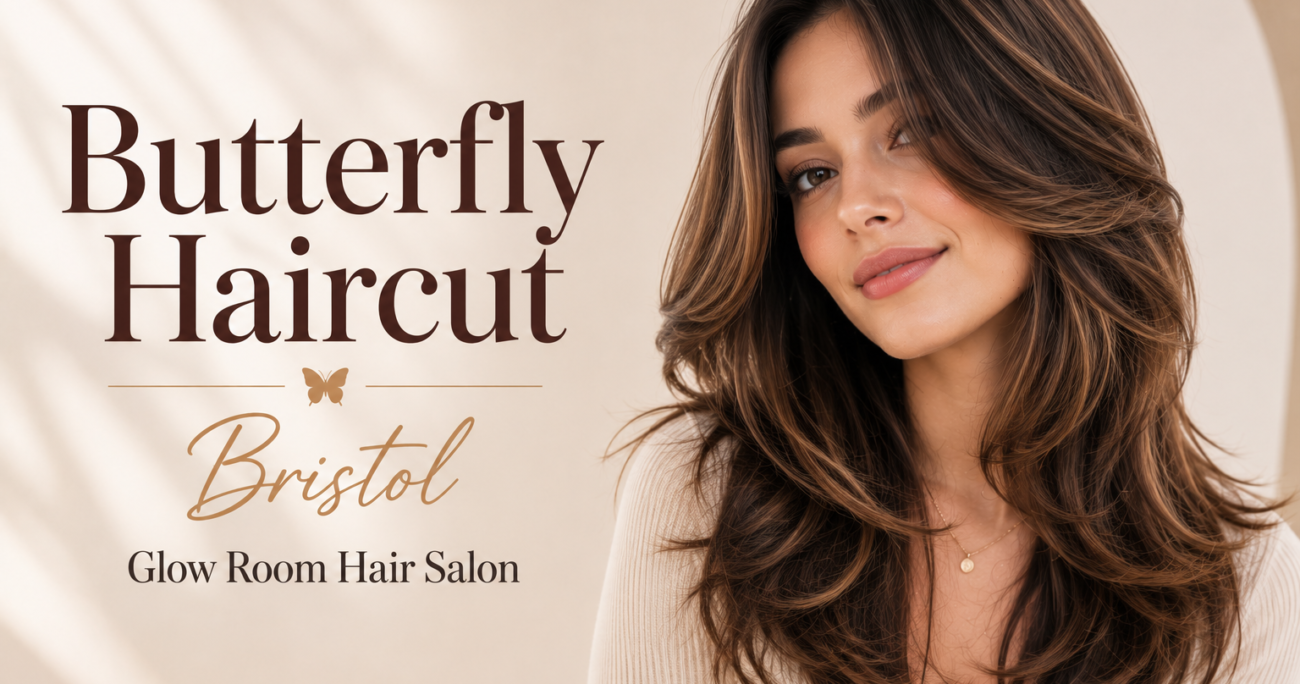
Thinking about a butterfly haircut in Bristol? Discover how this layered hairstyle works, who it suits and how to style it. Book at Glow Room today.
Butterfly Haircut in Bristol: Everything You Need to Know Before You Book
If you’ve been scrolling through hairstyle inspiration lately, chances are you’ve seen the butterfly haircut everywhere. It’s one of the most requested layered styles in salons right now, and for good reason: it adds volume, movement and face-framing softness without sacrificing your length. At Glow Room in Bristol, this is one of our most popular hair cuts and treatments bookings, and in this guide we’ll break down exactly what a butterfly cut hair style involves, who it suits, and how to care for it once you’ve had it done.
The trend has been building steadily across salons and social media alike, with more clients bringing in reference photos and asking specifically for this shape by name. Part of the appeal is how much it can be tailored: two people with completely different hair types and face shapes can both walk out with a butterfly cut, and yet the finished result will look distinctly different, because a good stylist adapts the placement and intensity of the layers to suit the individual rather than copying a template. Below, we’ll walk through exactly what the cut involves, the most popular variations and everything you need to know before booking with us in Bristol.
What Is a Butterfly Haircut?
- A butterfly haircut is a heavily layered style built around short, face-framing pieces at the front and crown, combined with longer layers underneath that flow down the length of your hair. When these two layers move together, they create a soft, winged shape, which is exactly where the name comes from.
- Unlike a standard layered cut, where layers are blended evenly throughout, a butterfly cut hairstyle relies on high contrast between shorter pieces around the face and jawline and longer sections beneath. This contrast is what gives the cut its signature airy, feathered look, almost like two hairstyles in one: shorter, face-framing layers on top and longer flowing length underneath.
- It’s worth noting that the butterfly haircut isn’t entirely new. Its roots trace back to the airy, volume-focused layered styles of the 1970s, but the modern version has been refined and reintroduced with softer blending and more precise, face-framing placement. This is part of why it feels both familiar and fresh at the same time, it borrows the volume of a classic shag while adding a more polished, deliberate structure that suits today’s styling preferences.
Why the Butterfly Haircut Has Become So Popular
The butterfly layered haircut has taken off across social media and salons alike, and it’s easy to see why once you understand what it offers:
- Volume without commitment – you get the illusion of a shorter style without actually cutting off your length
- Movement and bounce – the layered structure catches light and moves naturally, which is part of why it photographs so well
- Versatility – it works whether your hair is straight, wavy, or curly, and adapts to short, medium, or long lengths
- Low daily maintenance – once cut correctly, the shape holds up well whether you style it or let it air dry
- Grows out gracefully – because the layering is strategic rather than blunt, regrowth doesn’t ruin the shape as quickly as some other cuts
Is a Butterfly Cut Right for Your Hair Type?
One of the biggest advantages of a butterfly haircut is how adaptable it is, but there are a few things worth knowing before you book.
Hair Length
This style generally looks most striking on hair that’s shoulder-length or longer, since the contrast between the short face-framing layers and the longer underneath layers needs enough length to really show. That said, a shorter butterfly cut hairstyle is absolutely possible, it just relies more heavily on face-framing pieces to create the same effect.
Hair Texture
Medium to thick hair tends to show off the most dramatic layering and movement, though fine hair can absolutely work too, especially with the right cutting technique to avoid layers looking too thin. Wavy and textured hair tends to enhance the winged effect naturally, since the movement in the hair itself amplifies the layers, while straight hair still looks great but may benefit from some styling to bring out the shape.
Face Shape
- A skilled stylist will adjust where the shorter layers start based on your face shape. Starting layers around the cheekbones can help soften rounder features and draw the eye upward, while layers starting a little lower, around the jaw or chin, tend to suit those wanting a more elongating effect.
- For those with squarer or more angular face shapes, softer, rounded layers starting near the temples can help ease harder lines and create a gentler overall silhouette. Heart-shaped faces often suit layers that begin around the chin, balancing a narrower jawline with fuller volume lower down. None of this is a strict rulebook, but it’s exactly the kind of detail a good consultation should cover, so the cut works with your features rather than against them.
Popular Butterfly Cut Variations
Part of what makes this butterfly cut hairstyle so popular is how easily it can be customised. Some of the most requested variations include:
- Classic long butterfly cut – dramatic feathered layers starting from the cheekbones down, ideal for those keeping maximum length
- Butterfly cut with curtain bangs – soft, middle-parted bangs that blend seamlessly into the face-framing layers
- Butterfly bob – a shorter take on the trend, cut to chin or jaw length with layers radiating outward from the crown
- Butterfly shag or wolf hybrid – a more tousled, undone version with choppier, textured layers for an edgier finish
- Curly butterfly cut – tailored specifically to release natural curl bounce and reduce bulk without losing shape
Whatever variation you’re drawn to, the key is discussing your hair type, lifestyle, and how much daily styling you’re willing to do, so your stylist can tailor the cut to suit you rather than a one-size-fits-all template.
What to Expect at Your Butterfly Haircut Appointment
Consultation
Every great butterfly hair cut starts with a proper consultation. Your stylist will look at your natural texture, hair density, and face shape and talk through the level of drama you want, from subtle, blended layers to a bold, high-contrast wing effect.
The Cutting Process
The stylist will typically begin by sectioning the hair and establishing the shorter, face-framing layers first, before blending these into the longer length underneath. This layer-by-layer approach ensures the transition between short and long pieces looks intentional and feathered rather than choppy or uneven.
Styling Advice
Before you leave, your stylist should walk you through how to style the cut at home, whether that’s blow-drying with a round brush to boost volume at the crown, using a texture spray for a more tousled finish, or simply letting it air dry for a relaxed, natural look.
How to Style a Butterfly Haircut
One of the reasons the butterfly haircut has stayed so popular is that it’s genuinely easy to style, even on busy mornings.
- For volume: Blow-dry using a round brush, lifting sections at the crown and flipping the ends outward as you go
- For texture: Apply a lightweight texture spray or mousse to damp hair before air drying for natural movement
- For polish: Use a large-barrel curling iron on the face-framing layers for soft, defined waves
- For low-maintenance days: This cut is genuinely air-dry friendly, the layering does most of the work for you
Butterfly Haircut Maintenance
- To keep your butterfly cut hairstyle looking its best, regular trims every 8 to 12 weeks are recommended to maintain the shape and prevent the ends from looking straggly. Because the cut relies on strategic layering rather than one uniform length, it tends to grow out more gracefully than a blunt cut, but a trim will keep the wings looking crisp and intentional rather than overgrown.
- Healthy hair also makes a noticeable difference to how well the layers move and catch the light, so it’s worth pairing your cut with a good conditioning routine, particularly on the ends, which tend to be the oldest and most fragile part of the hair. Heat protectant is a good habit to build in too if you regularly blow-dry or use styling tools, since the shorter, face-framing layers are often styled more frequently than the rest of the length.
Why Choose Glow Room for Your Butterfly Haircut in Bristol
If you’re searching for a salon to bring your butterfly haircut to life in Bristol, here’s why Glow Room is a great choice:
- Conveniently located at 10 Filton Road, Bristol, BS7 0PA
- Open 7 days a week, with walk-ins available
- Experienced stylists who tailor every cut to your hair type and face shape
- A relaxed, welcoming salon environment
- A full range of hair cuts and treatments alongside beauty and SPMU services
Whether you want a subtle, blended take on the trend or a bold, high-contrast wing effect, our team will talk you through the best version of the cut for your hair before a single scissor touches your length.
FAQs
Is a butterfly haircut good for fine hair? Yes, though your stylist may adjust the layering to avoid making fine hair look thinner. A softer, more blended version of the cut often works best for finer textures.
Will a butterfly cut suit curly hair? Absolutely. A curly butterfly cut removes bulk and allows natural curl pattern to show through, often improving manageability and bounce.
How is a butterfly cut different from a wolf cut? The wolf cut is choppier, shaggier, and more dramatic, while a butterfly haircut is softer and more feathered, with layers designed to blend rather than create an edgy, undone look.
Do I need to style it every day? No. One of the biggest benefits of this cut is that it holds its shape well even air-dried, though styling with a round brush or texture spray can enhance the volume and movement.
How often should I get it trimmed? Every 8 to 12 weeks is generally recommended to keep the layered shape looking fresh and prevent the ends from losing definition.
Can I add bangs to a butterfly haircut? Yes, curtain bangs are one of the most popular additions, blending seamlessly into the face-framing layers for a soft, cohesive finish.
Will a butterfly haircut work if I have colour-treated hair? Yes, and in many cases it can even enhance the look of your colour. Layering allows different tones, such as balayage or highlights, to catch the light differently at each length, adding extra dimension to the finished style.
Is this cut high-maintenance to style? Not particularly. While it can be styled up with a round brush or texture spray for extra volume, the layering itself does much of the work, making it a genuinely low-effort option for busy mornings.
Conclusion
The butterfly haircut remains one of the most flattering, versatile layered styles available right now, offering volume, movement, and face-framing softness without asking you to give up your length. Whether you have straight, wavy, or curly hair, there’s a version of this cut that will work beautifully for you.
Ready to try the trend? Book an appointment with Glow Room in Bristol today and let our stylists create a butterfly haircut tailored to your hair type and lifestyle.
